
Skip to content

Technology training that meets operations where they are.

PGP supports technology training initiatives focused on deployment operations, software alignment, and workforce readiness — integrated into broader infrastructure and operational needs such as data center management, SOPs, and monitoring.

Overview

Compliant operations, sustainable training pipelines.

We build training around the actual systems people will run — integrated into SOPs, maintenance schedules, and the data workflows that govern day-to-day operations.

Outcome focus

Compliant operations with sustainable training pipelines.

What we deliver

  • Training program design and certification pathways
  • Operational frameworks and planning standards
  • Regulatory coordination support where applicable
  • Integration planning for maintenance, scheduling, and data workflows
Program focus

Platforms that land. Systems that talk to each other.

New platforms rarely fail because the software is wrong. They fail because deployment is rushed, integration is uneven, and the operators never get the muscle memory to run them. Our technology training is built around the two disciplines that close that gap.

Pillar 01

Platform deployment

Standing up a new platform is a program, not an install. We train operators and engineers on the deployment lifecycle as it will actually run on the client's stack — environments, release discipline, runbooks, and the monitoring that tells leadership the system is healthy.

  • Deployment lifecycle — environments, releases, rollback procedures
  • Configuration management, secrets, and access controls
  • Observability — logs, metrics, alerts, and on-call rotation
  • Runbooks, change management, and incident response
  • Operator certification tied to the platform the client will run
Pillar 02

Systems integration & interoperability

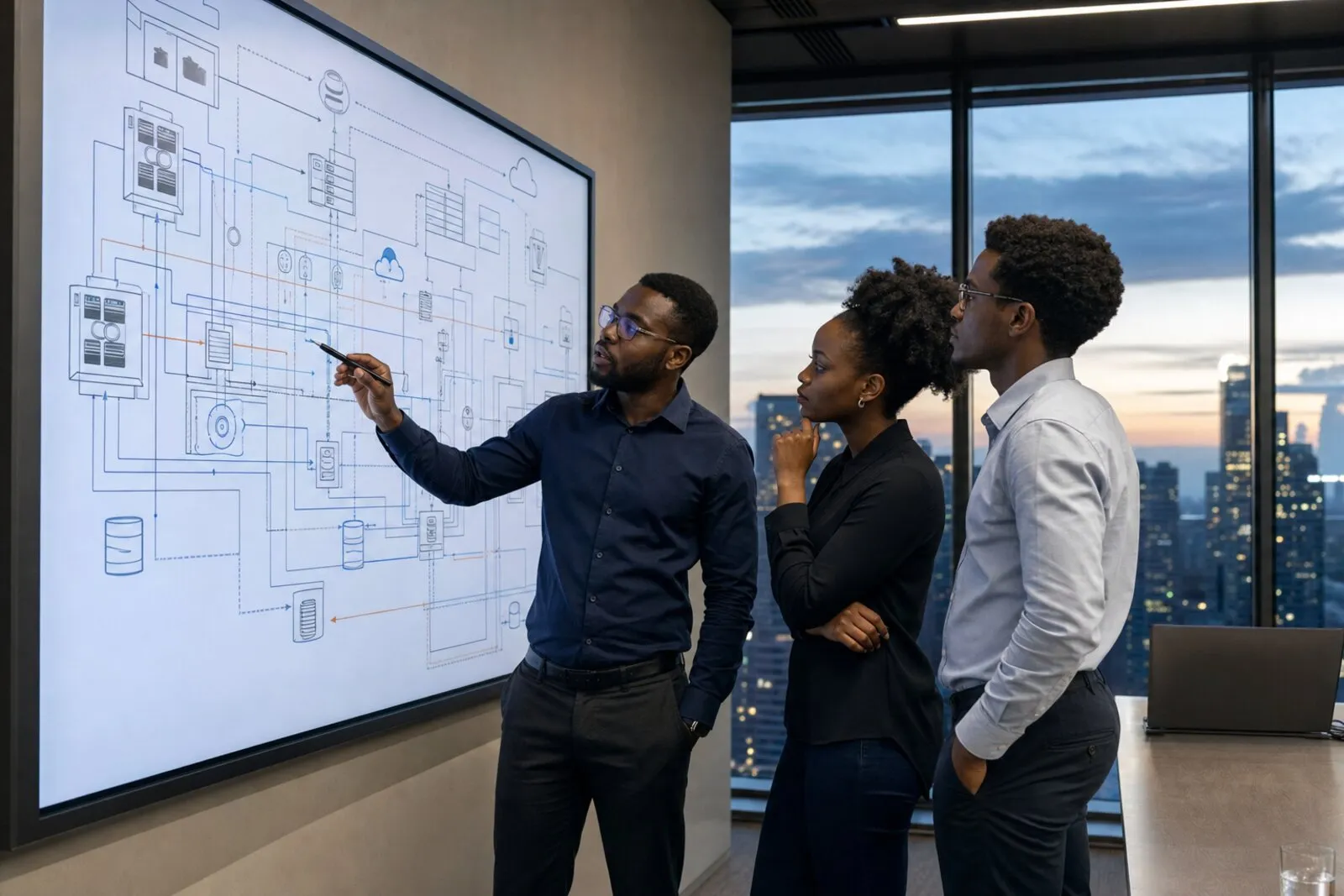
Most platforms live next to five others. Training has to cover the seams — APIs, data flows, identity, and the governance that keeps the integrated stack lawful and auditable. We teach the patterns that hold a multi-system environment together.

  • Integration patterns — APIs, events, batch, and message queues
  • Data architecture, schema mapping, and master-data discipline
  • Identity, access, and end-to-end security across systems
  • Interoperability standards and vendor-neutral design
  • Audit, lineage, and the records integrated systems must produce